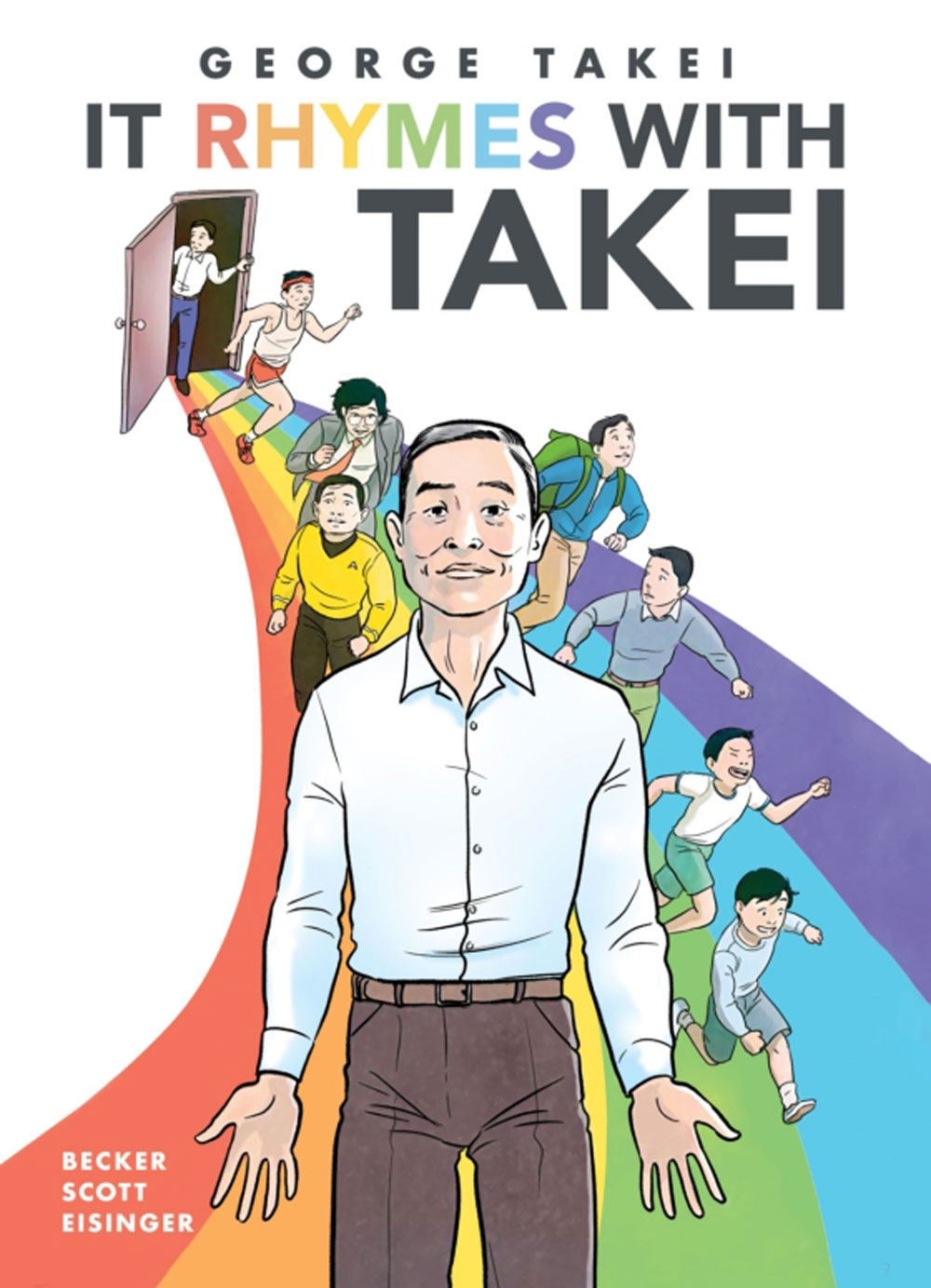
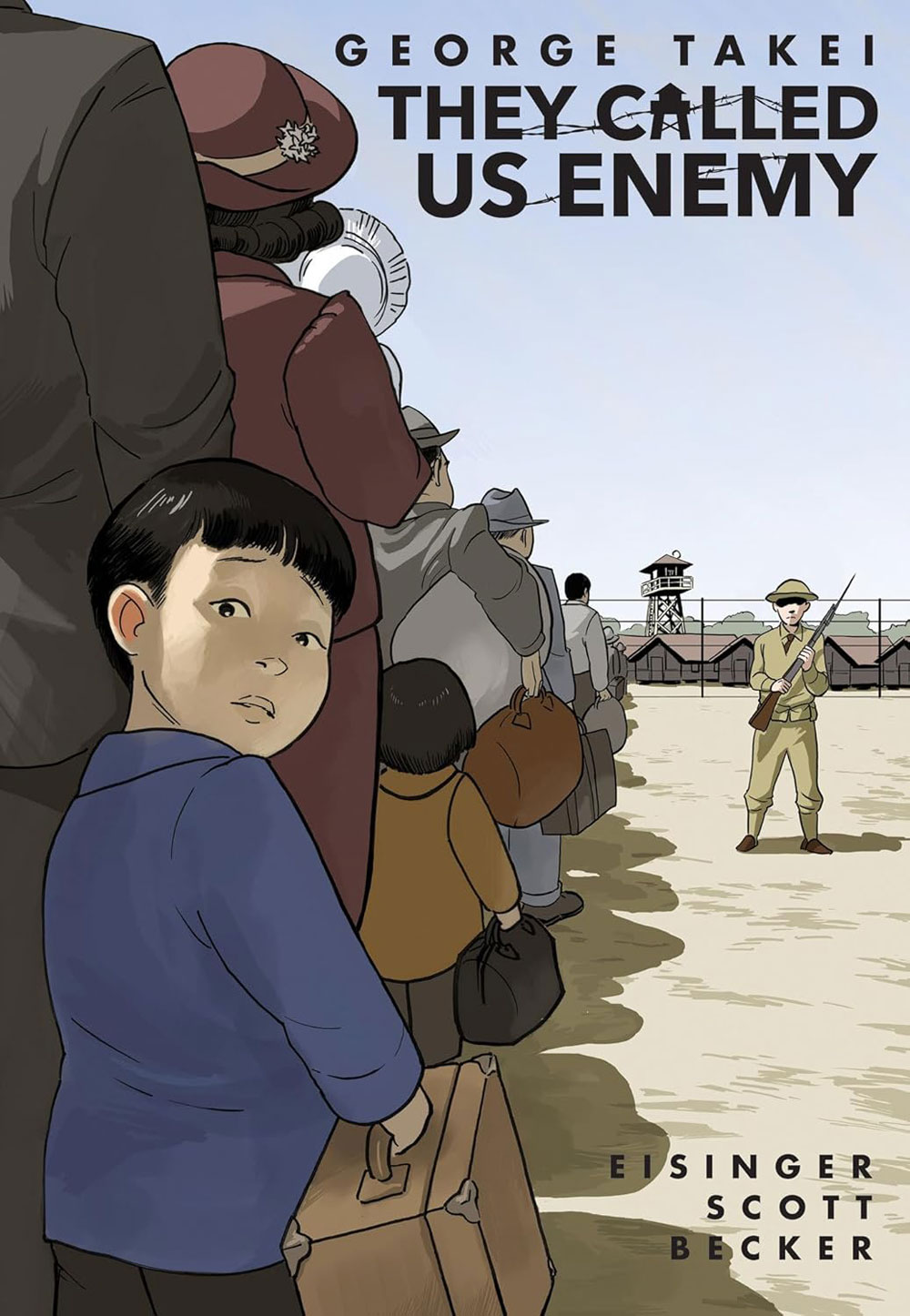
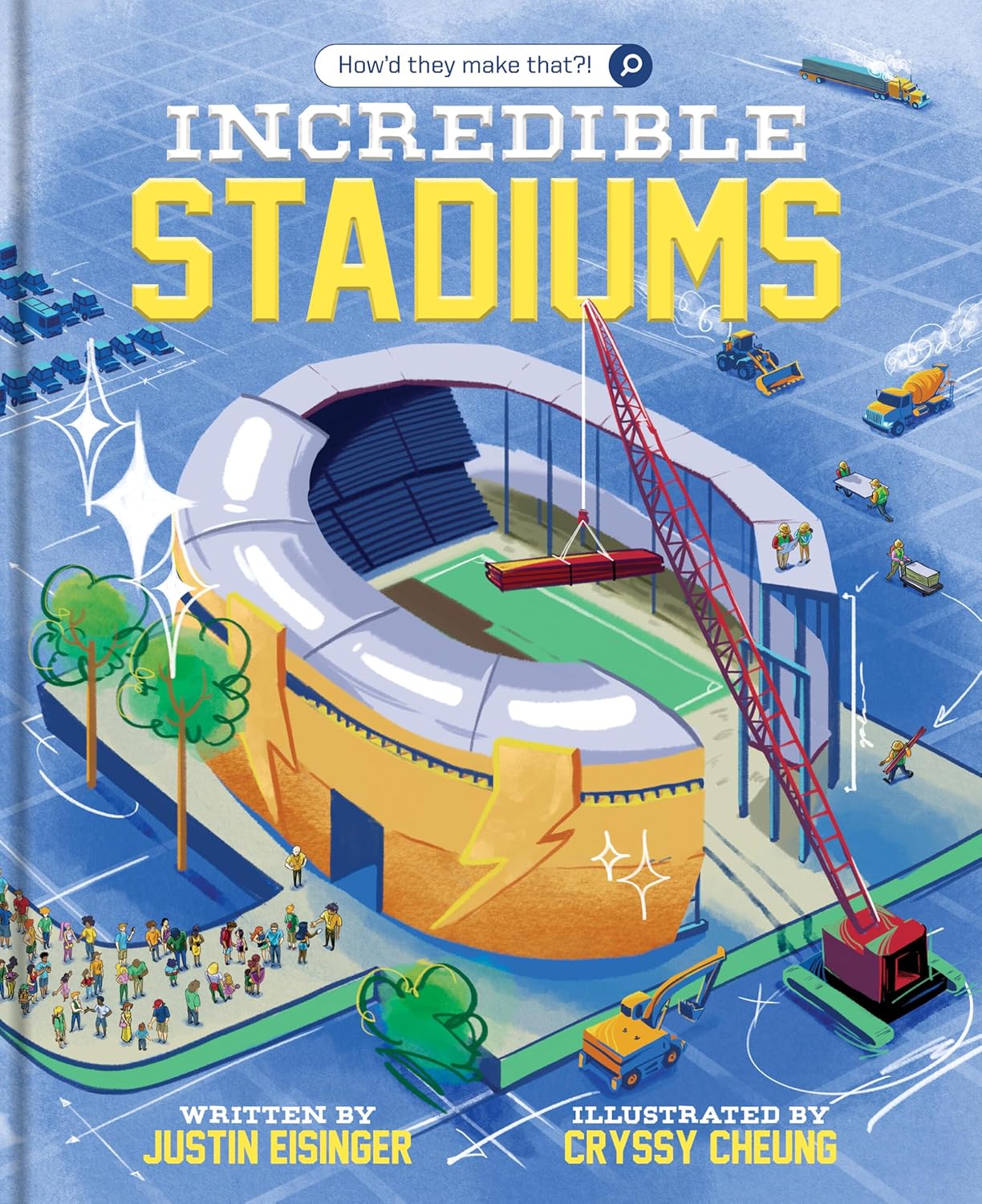
Justin Eisinger is co-author of two Eisner Award-winning graphic novels with George Takei, including the New York Times bestselling They Called Us Enemy, and 2025’s spiritual successor, It Rhymes with Takei — the celebrity actor and activist’s most personal story ever. Eisinger is also creator of the illustrated children’s nonfiction book series How’d They Make That?! The first book, Incredible Stadiums, lands on shelves this October from Chronicle Kids!
Bsky @JustinEisinger
Email: justin@JustinEisinger.com
Agent: Dara Hyde / Hill Nadell Literary Agency

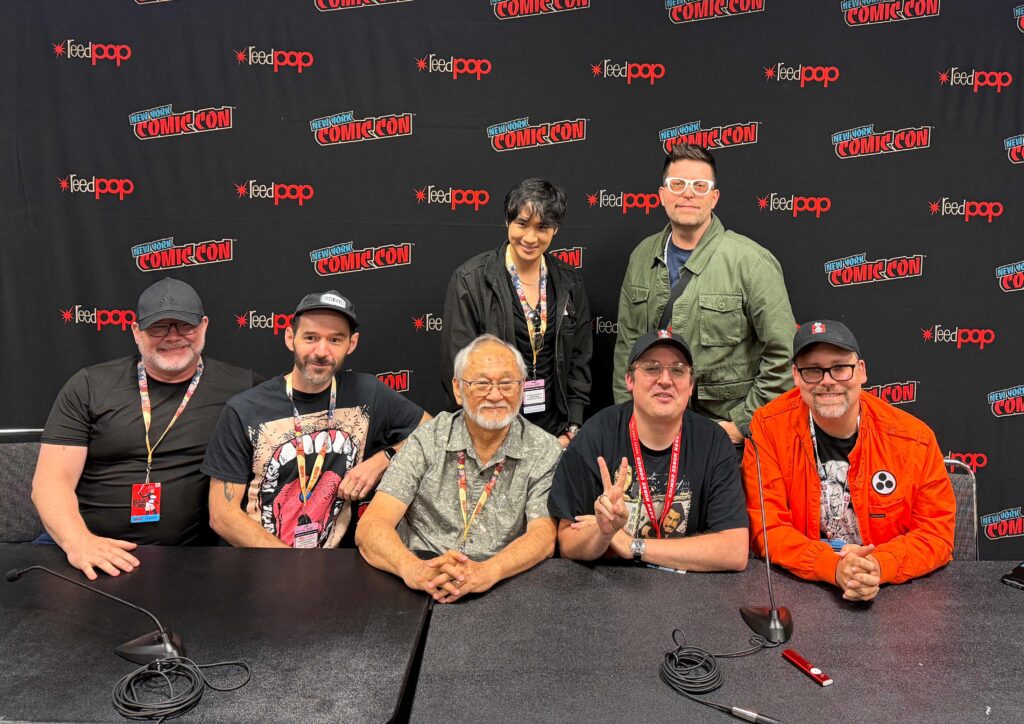
Wow, New York Comic Con 2026 was a whirlwind of activity! I spent five days in the Javits Center, checking out Retailer Day on Wednesday (it was as chaotic as The Beat described it), then was pretty much nonstop from Thursday through Sunday, chipping in around Stan and Julie Sakai’s tables in Artist Alley, helping Stan navigate the show to get to panels and signings for IDW and Dark Horse, assisting with our Walmart related activation and co-moderating the Usagi Yojimbo panel on Saturday, plus surviving the torrential rains on Sunday. Let’s take a look at some highlights!
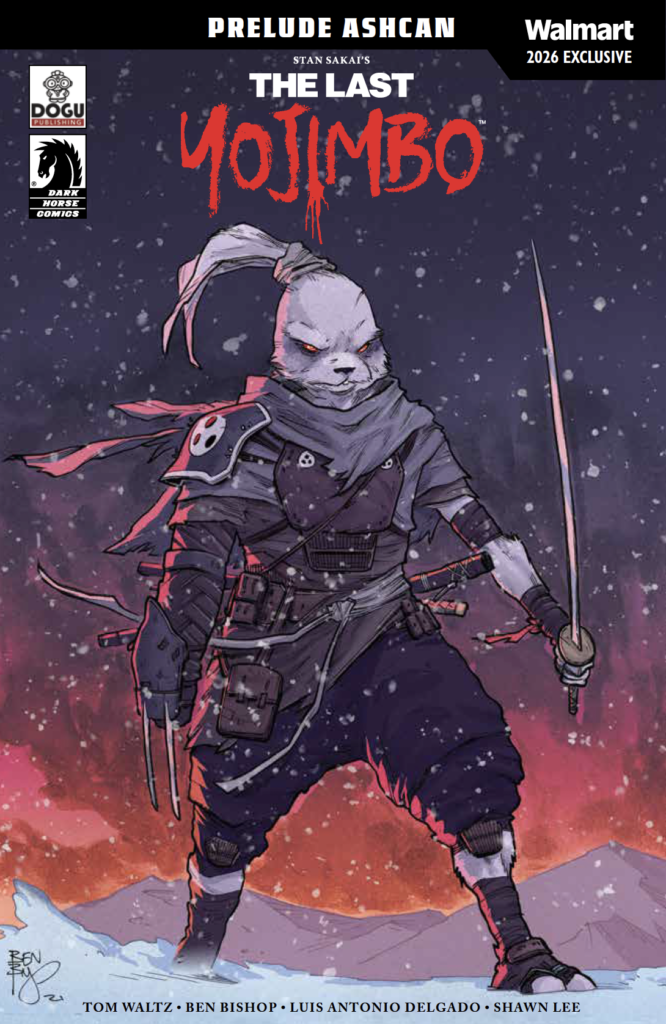
A big focus of Dogu Publishing’s NYCC efforts was our second “annual” activation with Walmart, this year featuring a new 16-page Prelude Ashcan for our upcoming series The Last Yojimbo. With a special 7-page story that sets up this new world of Usagi, fans had three cover options to choose from. This is the main cover that Walmart was giving away on Saturday.
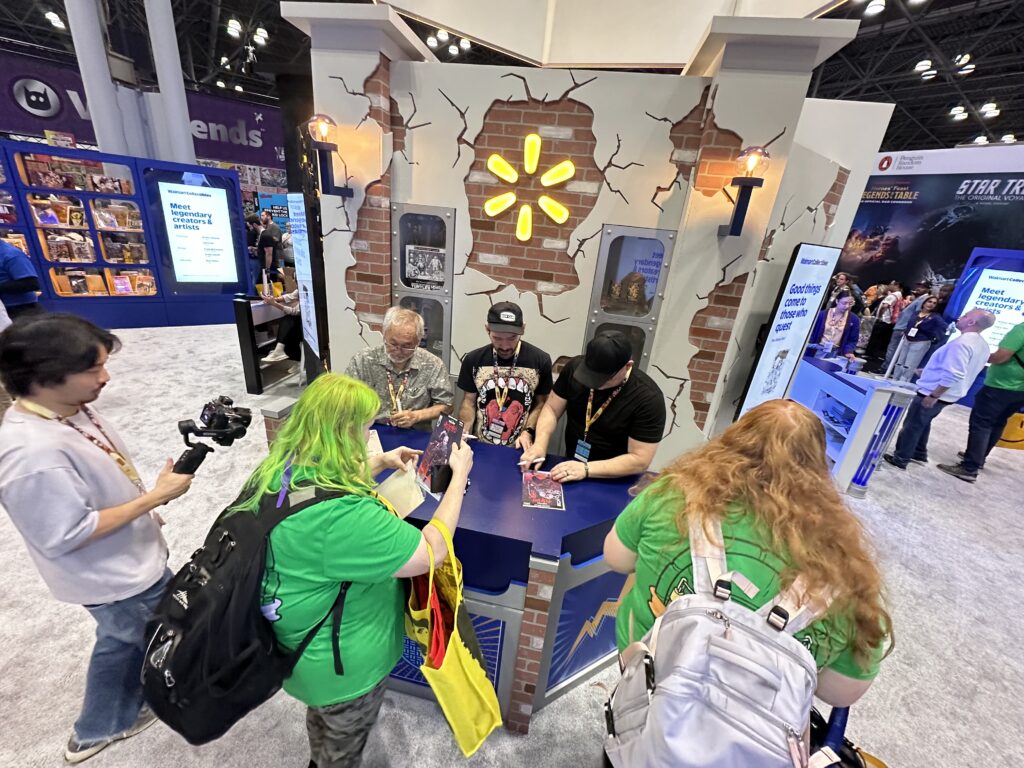
Here’s a shot of the cool setup in the Walmart booth, where Stan Sakai, Ben Bishop, and Tom Waltz are signing ashcans and other items for eager fans. This is the first real look at The Last Yojimbo anyone has gotten!
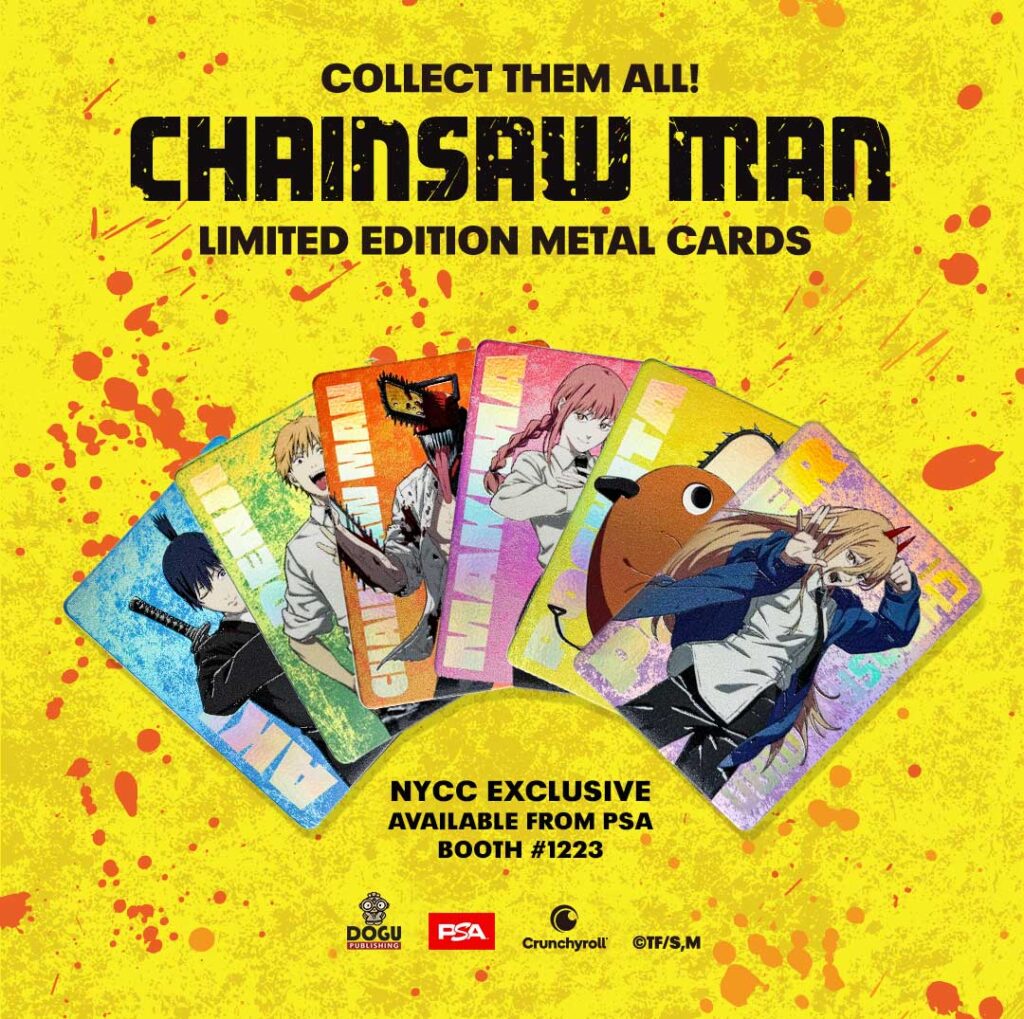
Another product I’d been working on was this exclusive Chainsaw Man metal trading card set that we premiered at NYCC in conjunction with CrunchyRoll and PSA. Each card was sold individually packaged and in a blind bag, with just 40 cards signed by the American Voice Cast actors. So there was a chase for real scarcity!
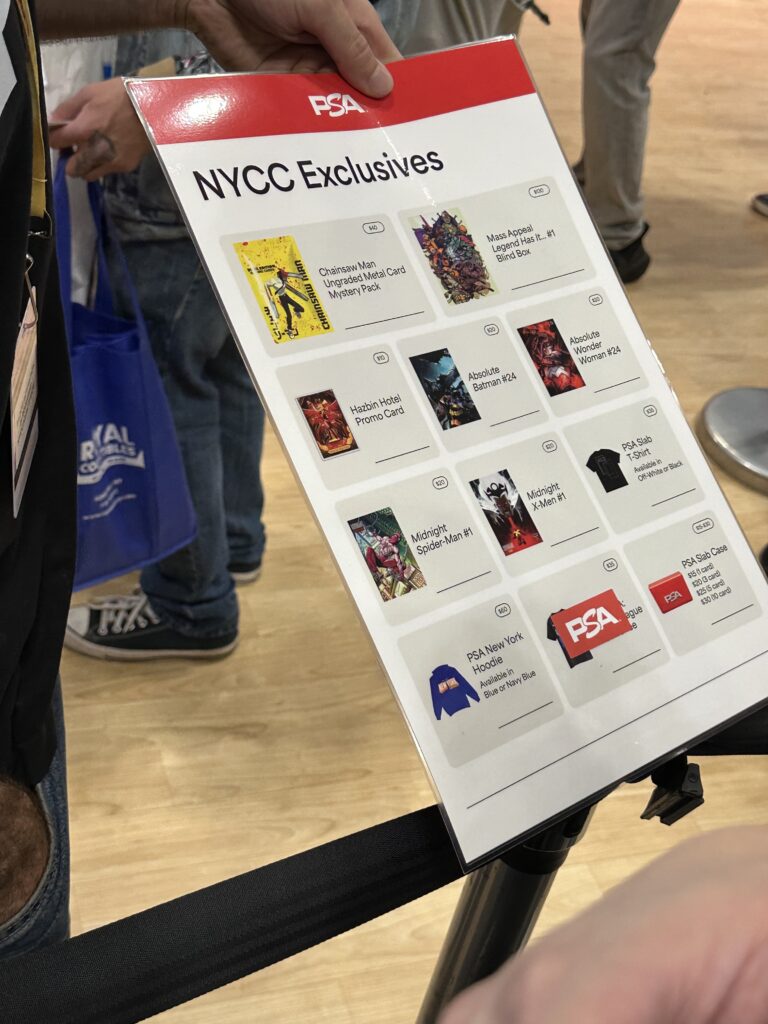
Here’s a look at the CSM cards in the top left “first” spot on the PSA item menu that all fans used to determine their purchases at the PSA booth. The cards sold out early on Saturday! Our first foray into collectibles was a success.
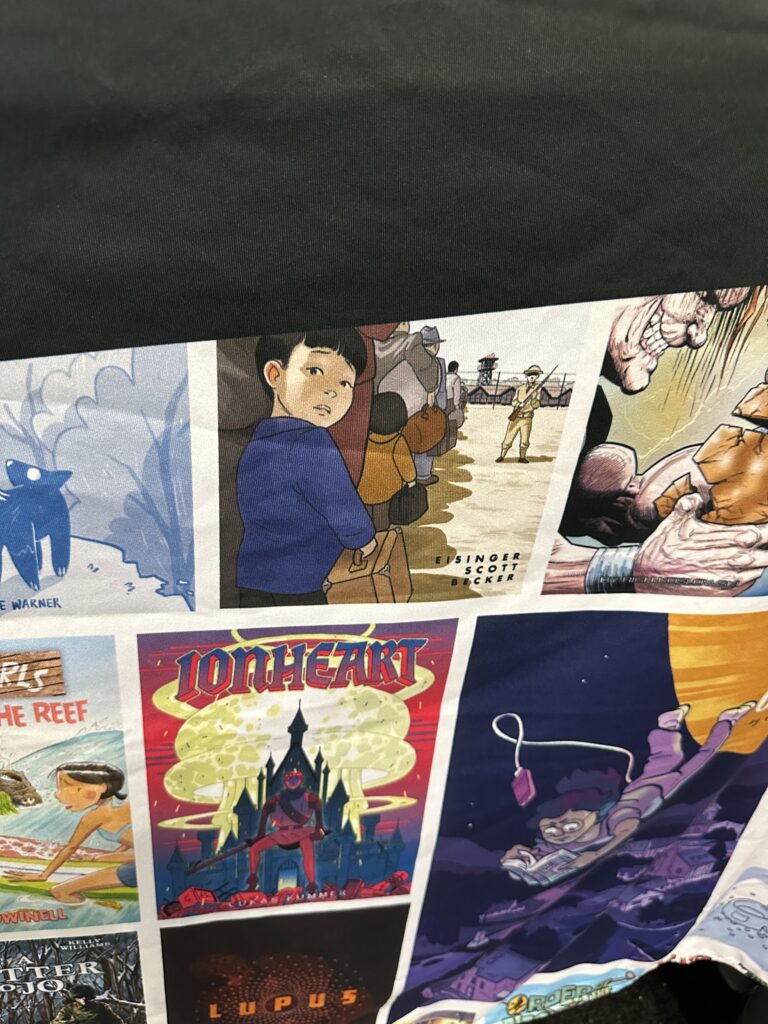
While accompanying Stan to one of his signings at IDW for the upcoming TMNT The First Ronin I noticed the They Called Us Enemy graphic on the table banner. So yeah, I was represented properly the whole show!
This post started with a shot of the team after our panel, so we’ll bring it back there: the panel went great! After a night of team building exercises (eating and drinking) the group was primed and locked in for a great conversation. We followed most of what we covered at San Diego with a few updates, sharing the news and camaraderie with our East Coast fans. Everyone seemed to enjoy the show and I was approached by several people after the panel expressing their appreciation and asking follow up questions.
Bonus event was meeting briefly in person with my agent, Dara Hyde, and talking about pending projects — along with prioritizing my creative goals for 2027. A good and insightful conversation!
Anyway, with so much to see and do, NYCC proved once again that it’s the center of the comics and entertainment universe. I can’t wait to go back.
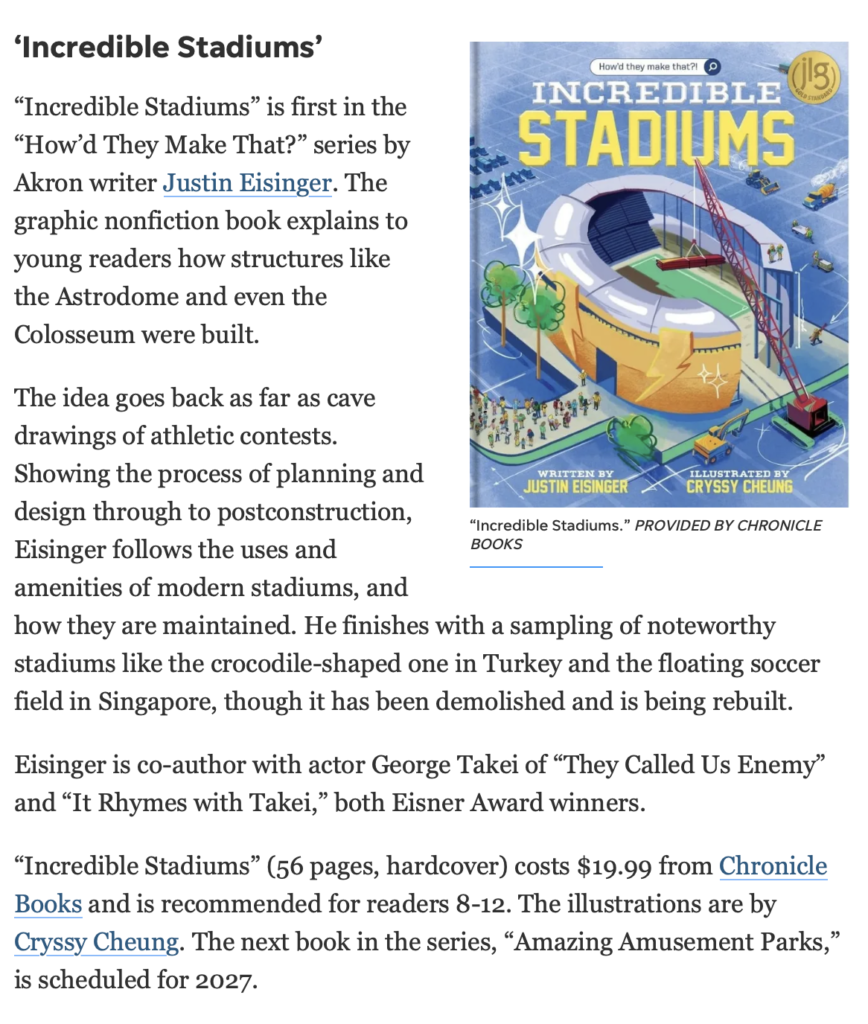
Thanks to the Akron Beacon Journal for including this review of How’d They Make That?! Incredible Stadiums in their October 11th weekend edition.
More info coming soon on upcoming signing events and appearances!
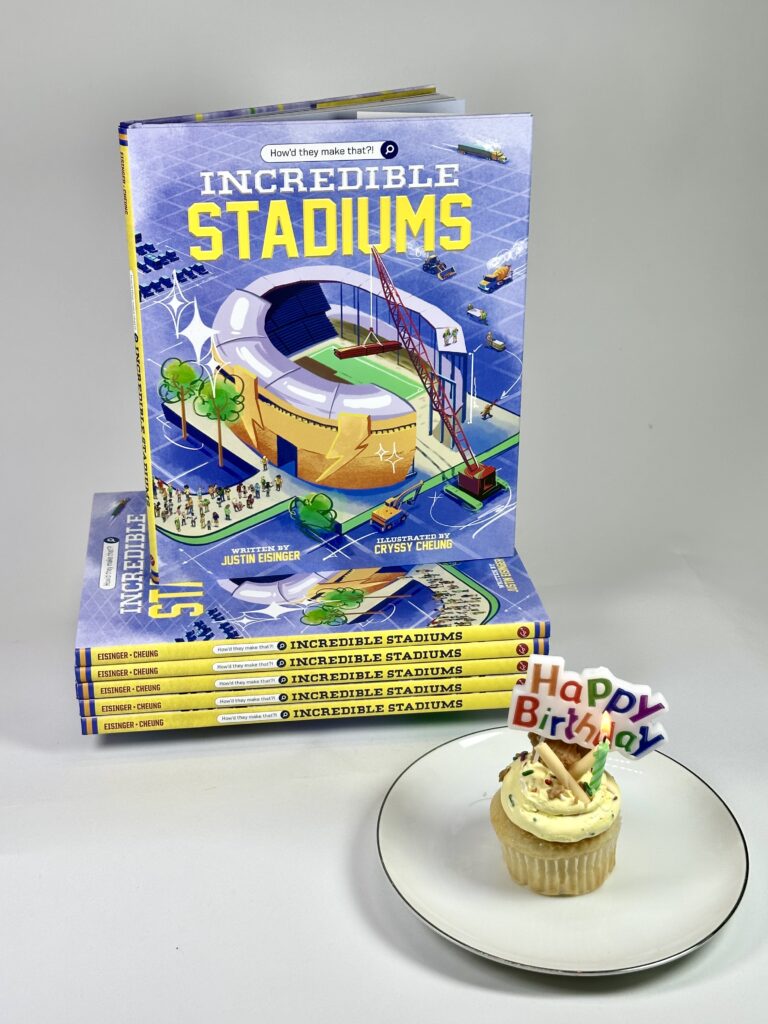
It’s here! After years of hard work and patience, my first collaboration with Cryssy Cheung is on shelves now!
Happy Book Birthday to How’d They Make That?! Incredible Stadiums! It came to the world on October 6th, 2026, at 56 pages and 1.2 pounds.
You can order a copy here or here, but no matter where you get your copy, please drop us a five-star review!
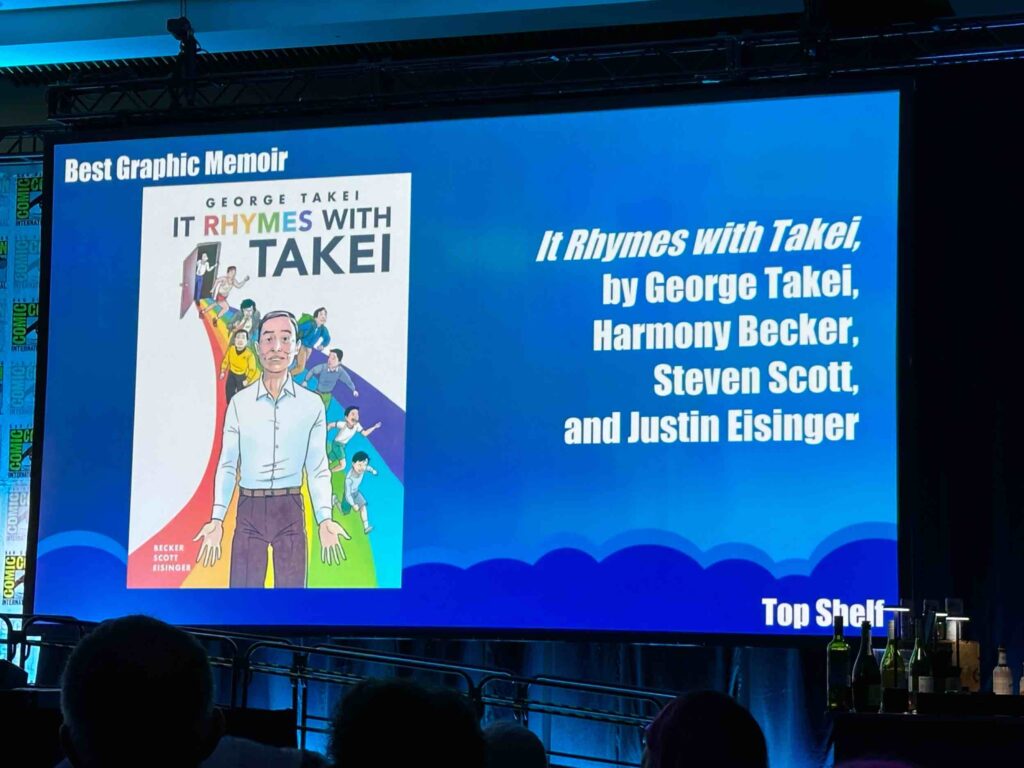
Friday night a dream came true for the second time: we won another Eisner for our work with George Takei. But this time it was a different experience.
When we won Best Reality-Based Work in 2020 the world was shut down. Even though I lived just a few blocks from the Bayfront Hilton, like everyone else, I watched Phil Lamar read our names on a streaming video from my couch. It was exhilarating but also anti-climactic.
Cut to last night.
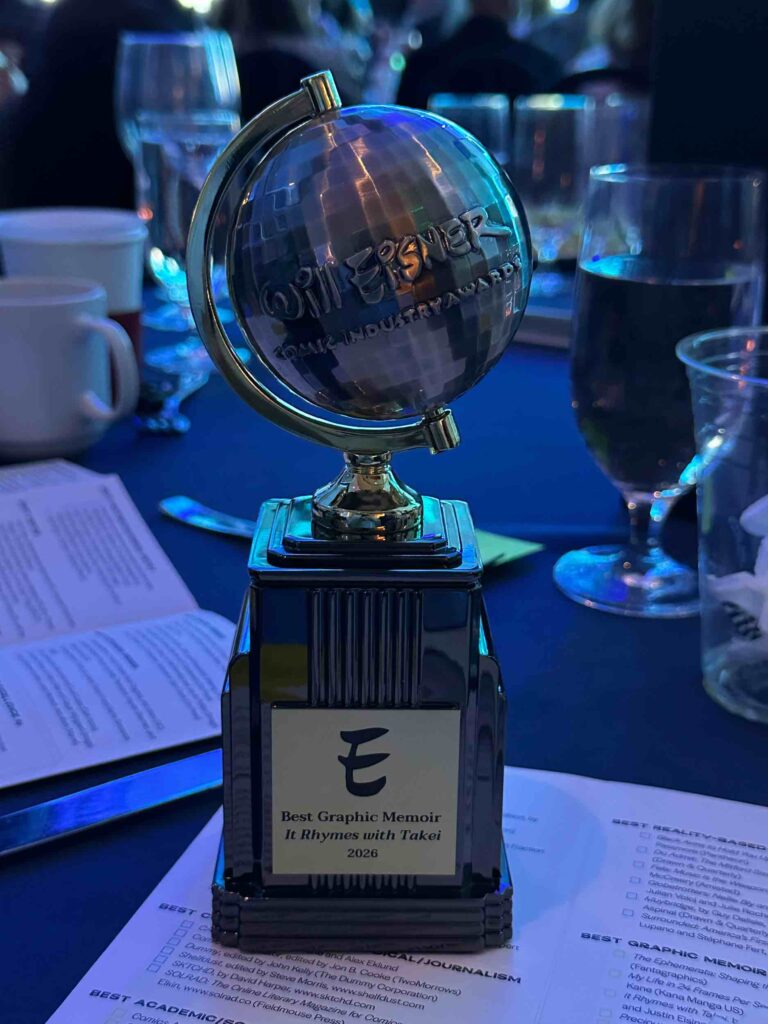
We won the award for Best Graphic Memoir. I watched George accept the award. I was handed a trophy and had my picture taken and now have photographic proof of maybe the happiest I’ve ever looked.
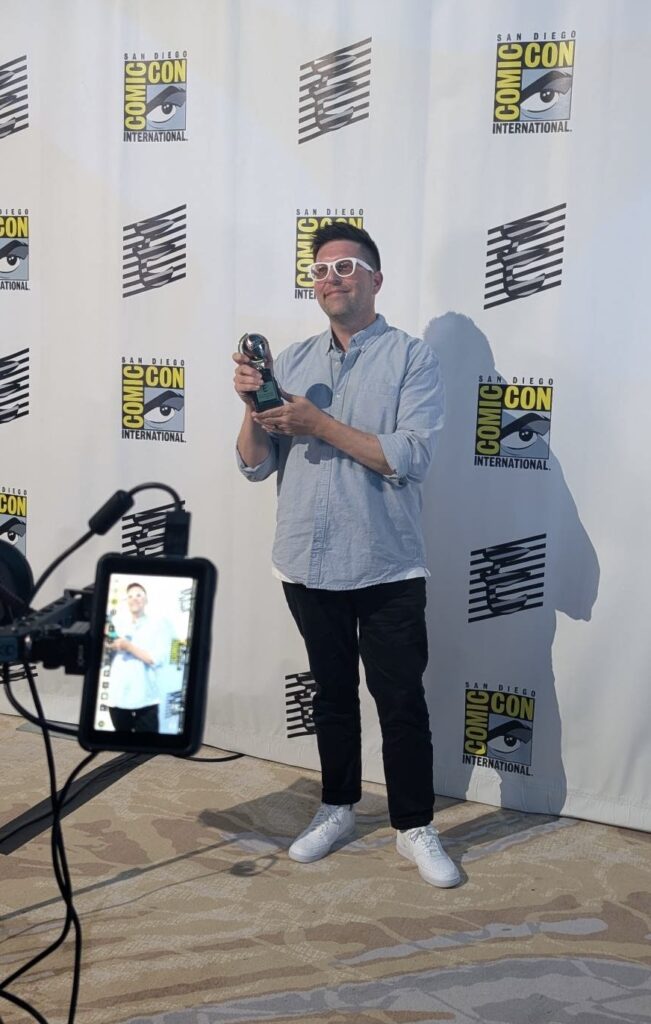
Thank you to Ted Adams, Chris Ryall, Greg Goldstein, Leigh Walton, Chris Staros, the team at PRH, along with Aub Driver and the folks at IDW Publishing / Top Shelf for making these moments possible.
Unfortunately the rest of the team wasn’t in attendance, but I am so proud to have made these books with Harmony and Steven, and Jose and Gilberto and Nathan, and of course the big man himself, George.
Now I know what I want to do for the rest of my life. Thank you, comics.
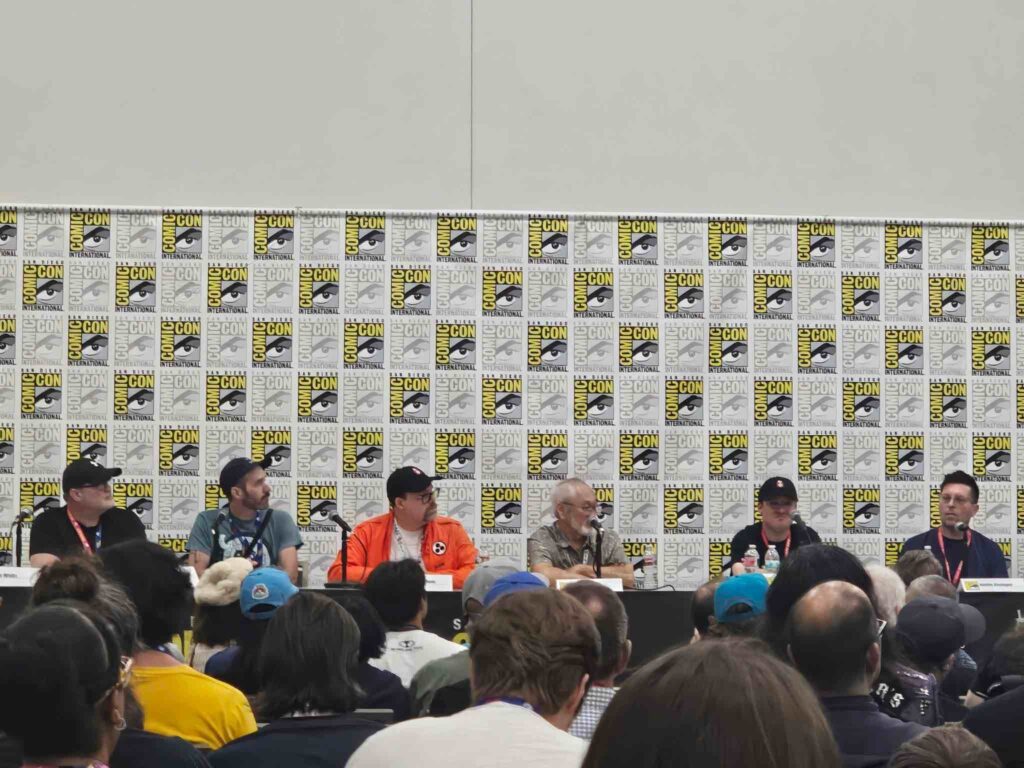
I started going to SDCC in 2006, but we lost two years to the pandemic, so this was my 18th consecutive Comic-Con, not counting the bonus November show in 2021. That’d be number 19. For 13 of those years I was a downtown SD local, but now I’ve got to fly in and do the tourist thing like everyone else.
On the upside, this was my second year as part of the Usagi Yojimbo panel! This year I joined the legend himself, Stan Sakai, along with Kaitō ’84 team Jared Cullum and Zack Rosenberg, as well as the newly announced (right then on the panel!) creative team for The Last Yojimbo, author Tom Waltz and artist Ben Bishop, two of the main creators on the smash hit TMNT The Last Ronin.
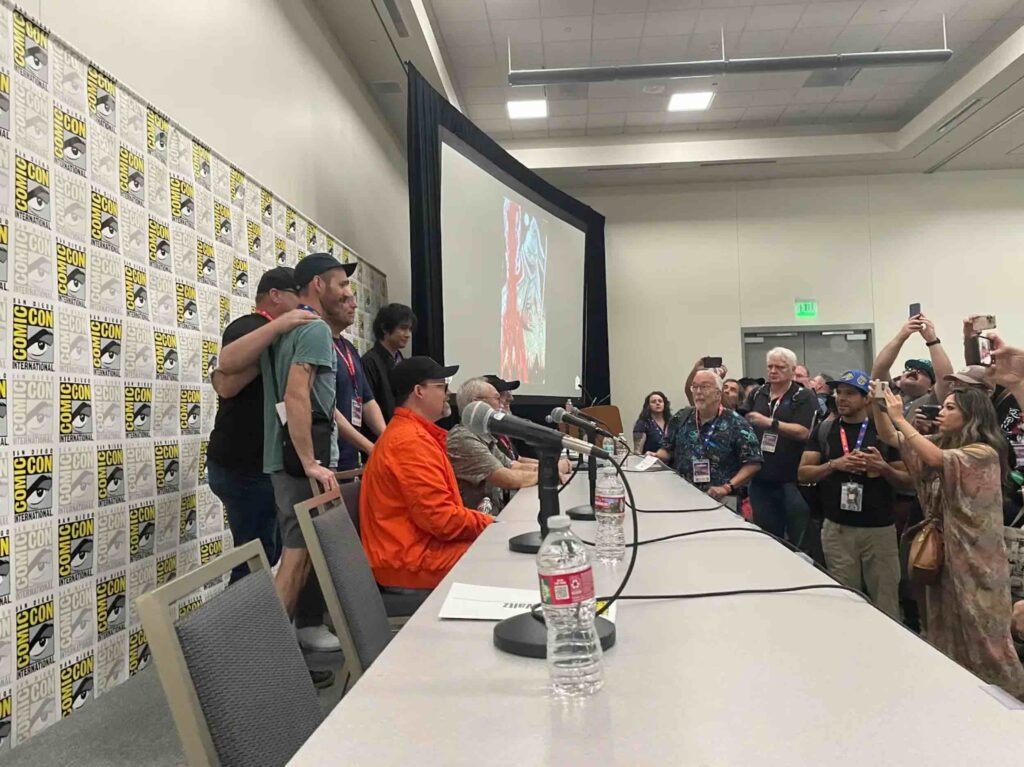
Serving in my capacity as Editor-in-Chief for Stan’s imprint Dogu Publishing, it’s so exciting to oversee this unprecedented expansion of the world of Usagi Yojimbo! I’m very lucky to work with such a great team and talented creators for a beloved IP. And judging from the crowd enthusiasm in this photo, I think the audience liked what we’re doing, too.
At the end of June I traveled to Chicago for the first time in over 20 years to attend the American Library Association Annual 2026. This was my third time attending an ALA event, and my second time as an author and panelist. As the premiere meeting for librarians from across the country, it is an incredible opportunity to network with publishing professionals and the experts out there on the front lines helping readers find new titles every day.
One reason I went to the show was because I’d been invited to participate in an ALA Graphic Novels and Comics Round Table panel. This particular panel was concerned with Civic Engagement, Advocacy, and Comics, which both my books with George Takei feature as central themes. We had a lot to talk about, and the panel was stacked with talented folks including Sydney Halpern, Jim Terry, Jarrett Dapier, and Lucky Srikumar.
Following the panel I had the first of two signings at the Top Shelf / IDW booth, where 45 minutes flew by with a blizzard of autographs and brief encounters with enthusiastic librarians. What a way to recharge your batteries!
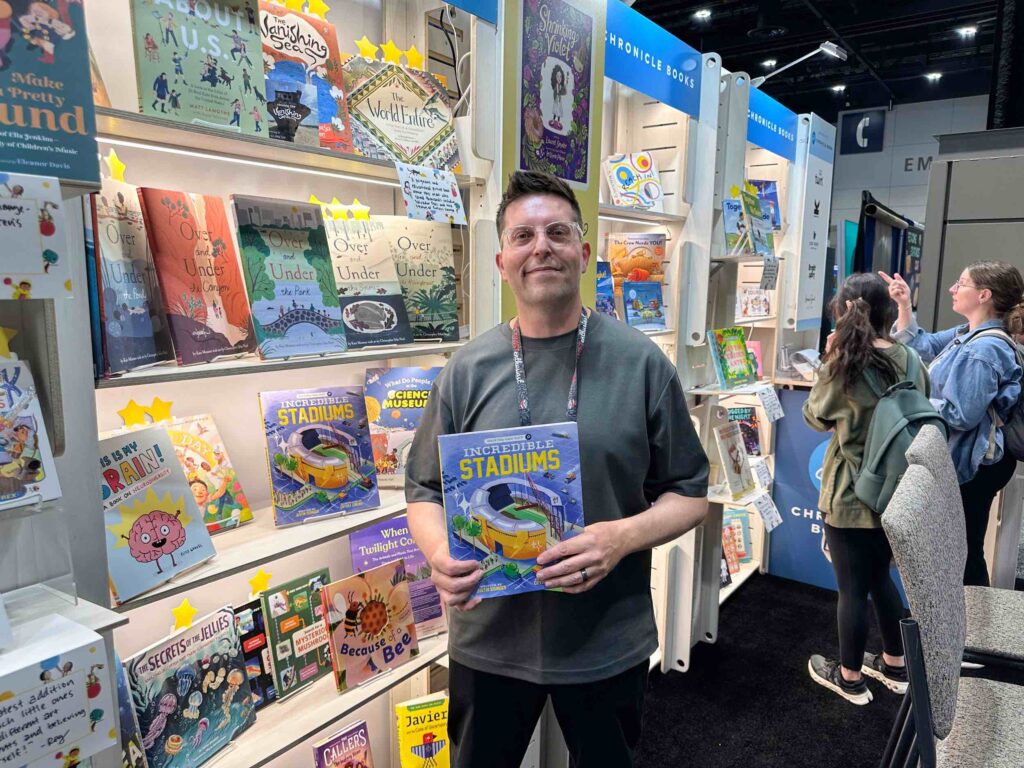
Just as exciting as the panel and signings was visiting the Chronicle Books booth, where I saw my upcoming — and very first! — children’s picture book How’d They Make That: Incredible Stadiums! in person! Okay, so I’d received my advance copy a few days before the show, but it was very cool to see my book displayed on the classy shelves in the Chronicle booth and meet their marketing team. Thanks for the warm welcome!
Beyond my scheduled events I had the chance to reconnect and/or randomly cross paths with a certifiable who’s-who of my publishing career past, bumping into friends and colleagues from throughout my journey all around the show floor. It was so great to see everyone.
And then it was over. Just an easy 6-hour drive back to NE Ohio and a promise that it won’t be another 20 years before I’m back in Chicago.
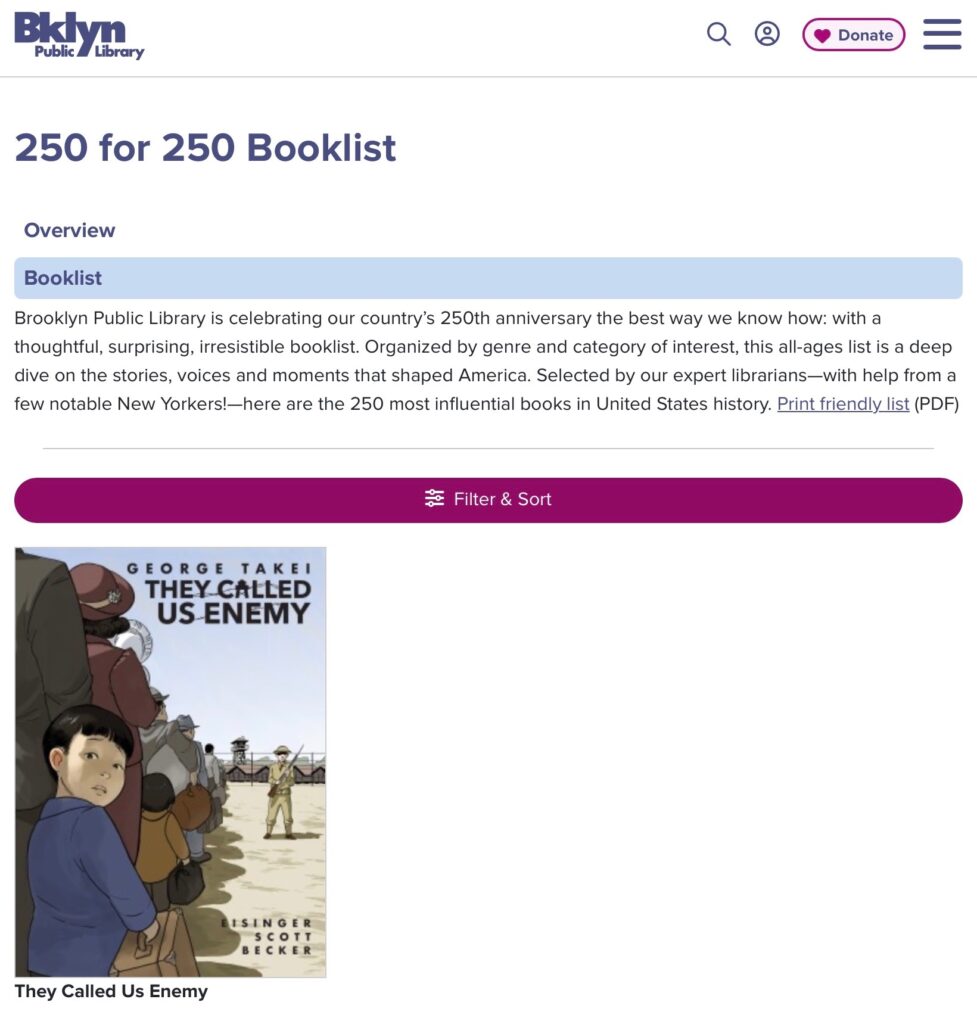
It is a huge honor for They Called Us Enemy to be included on the Brooklyn Public Library‘s list of “the 250 most influential books in United States history.”
This list contains so many personal favorites, and indispensable pieces of American literature. A veritable Mount Rushmore of publishing.
I don’t even know what to say except thank you for reading!
See the whole list HERE.
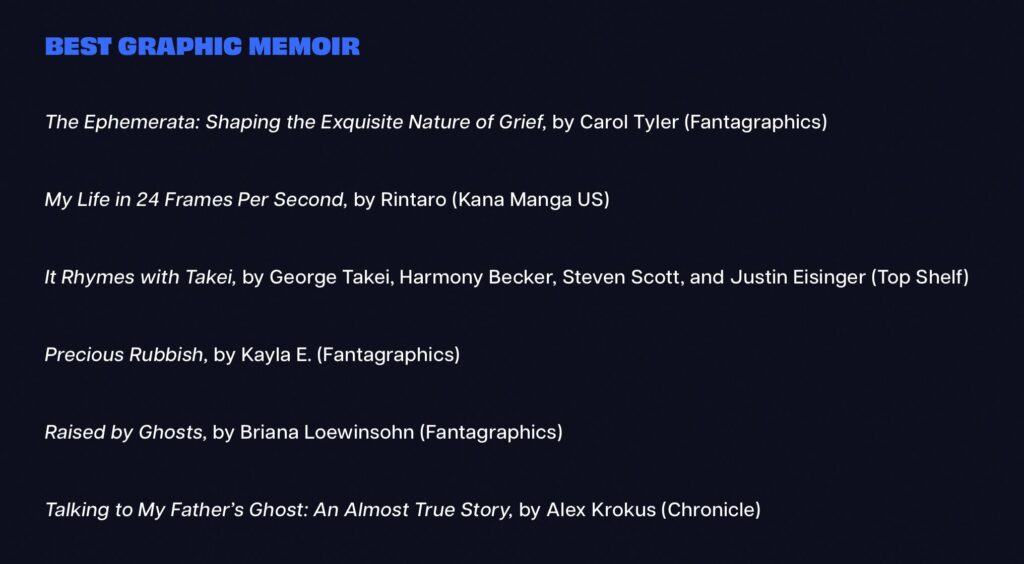
Wow, It Rhymes With Takei was nominated for “Best Graphic Memoir” at the 2026 Eisner Awards.
This was the second time our team of George Takei, Steven Scott, Harmony Becker, and myself teamed up with Top Shelf Productions to tell the story of George’s life experience in a graphic novel, and both times we’ve received Eisner Award nominations. That’s hard to comprehend.
It’s been incredible enough to watch the first book, They Called Us Enemy, go on to international acclaim and become one of the bestselling nonfiction graphic novels of the last ten years. Accomplishments that were unimaginable while we had our heads down doing the work.
Like that book, It Rhymes With Takei lands at a moment in American history when the hard-fought progress of Civil Rights and LGBTQ+ representation are under attack not by outlying forces, but within the very halls of administrative power.
They Called Us Enemy captured the disgusting history of Japanese American internment and put faces to the names of those who perpetrated these injustices at a time when the U.S. government was ripping immigrant families apart at the border. We drew unmistakable lines from past actions to present policies.
It Rhymes With Takei comes at another fraught time for Democracy. Transgender individuals have become scapegoats for complicated societal problems over which they have no control or influence, while the Supreme Court strips away Civil Rights piece by piece, attacking reproductive rights, women’s right, voting rights, with suggestions that landmark rulings on gay marriage are next. George’s story illustrates the inhumanity of those actions.
As proud and honored as I am at this latest Eisner Award nomination, I am mostly hopeful — not that we go home with another trophy on a Friday night in July — but instead hopeful that knowledge gained by people like George is being read and learned by current and future generations; that it can inform and inspire them as they build towards a better tomorrow.
It’s never too late to learn. It’s never too late to change. That’s why I believe in books like It Rhymes With Takei.
Congrats to the whole team:
George Takei
Steven Scott
Harmony Becker
Jose Villarrubia
Nathan Widick
Leigh Walton
See the full list of nominees HERE.
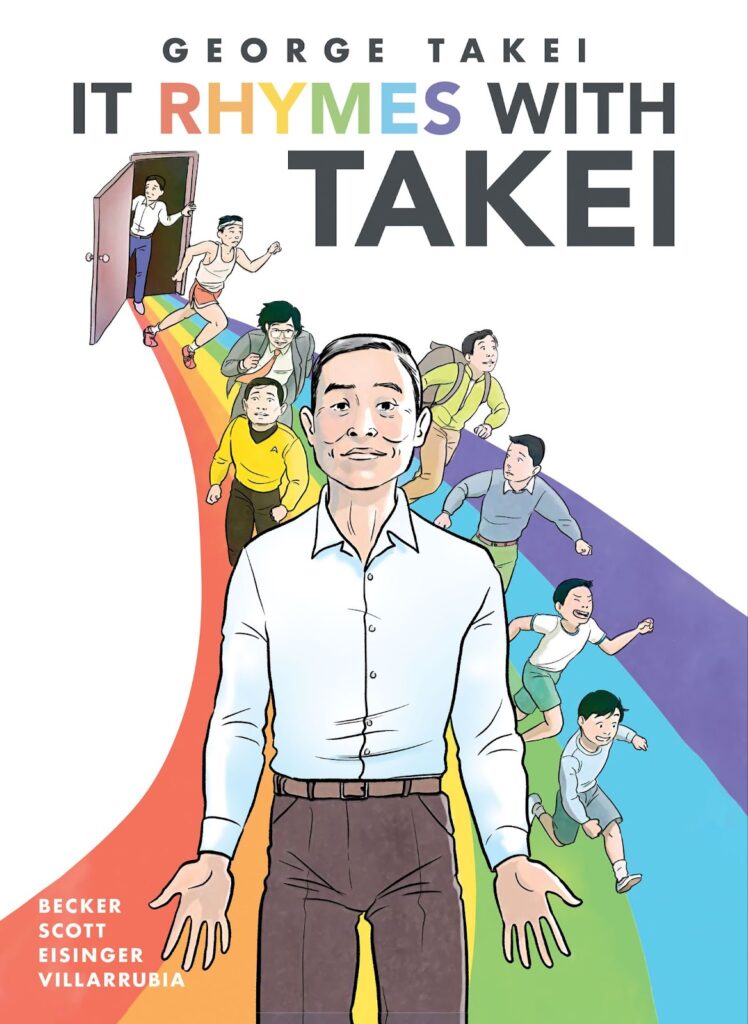
One Book, One Coast kicks off its first ever event with They Called Us Enemy. It will be featured in 140+ library systems in Oregon, Washington, and California. What an honor!
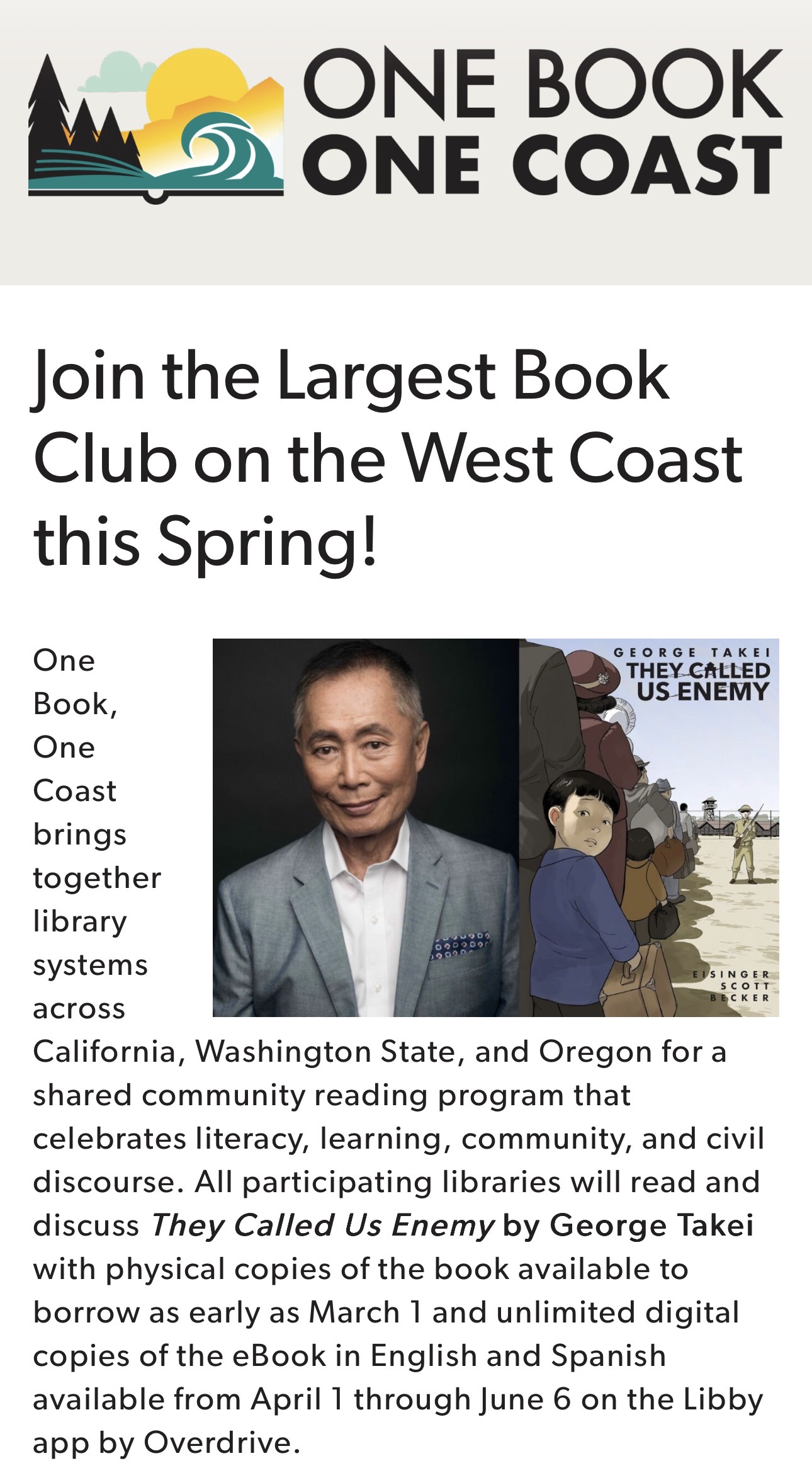
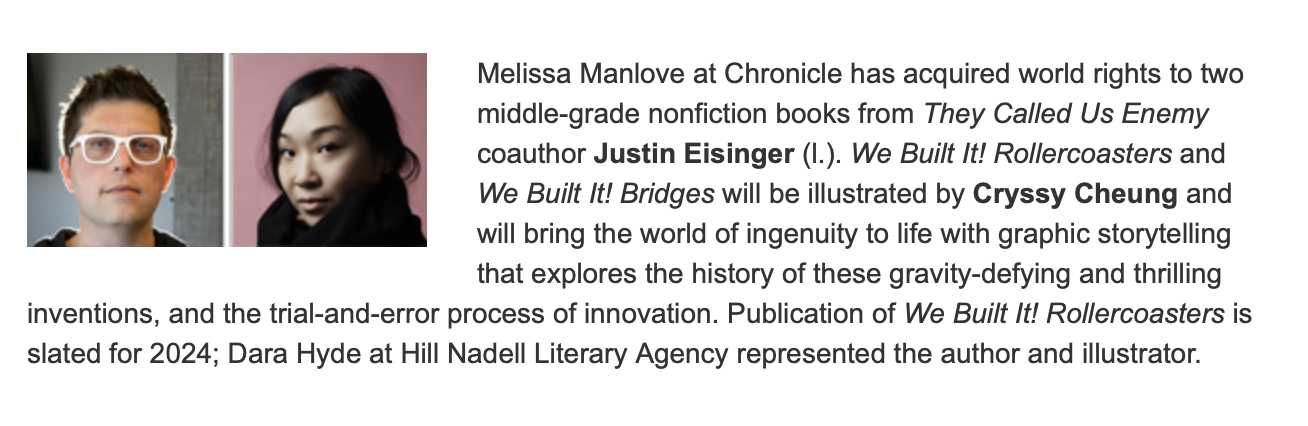
This is the notice that went out when we sold our two-book series to Chronicle. So exciting! Savvy viewers will realize the titles and scope have changed. Ha! That’s publishing.